
Nestled in the heart of Udaipur, the Mahalaxmi Temple is more than just a place of worship—it’s a vibrant living tradition, a symbol of faith, and an integral part of Udaipur’s cultural tapestry. Dedicated to Goddess Mahalaxmi, the deity of wealth and prosperity, this temple is especially beloved by devotees seeking hope, blessings, and spiritual solace.
History & Legend

- The Mahalaxmi Temple is located in Bhatiyani Chohatta, near Rao Ji Ka Hata Road and the Mamaji Ki Haveli in Udaipur.
- It is believed to have been built during the rule of Maharana Shambhu Singh, although some sources also attribute its construction to Maharana Jagat Singh.
- The temple’s origin story involves the installation of idols of Mahalaxmi, Sundar Vinayak, and Rishabhdev.
- One popular legend claims that some of the idols came from Rampura (Malwa), while others believe Bhinmal was the origin. Either way, the idol of Mahalaxmi is central to the temple and devotion around it.
Architecture & Layout

- The temple reflects the architectural sensibilities of middle-period Mewar, combining artistry with spiritual symbolism.
- At the entrance, there are sculptures—elephants holding a lotus and a water-filled kalash (a sacred water pot)—as though they are performing Abhishek for the goddess. These decorative symbols highlight both reverence and aesthetic harmony.
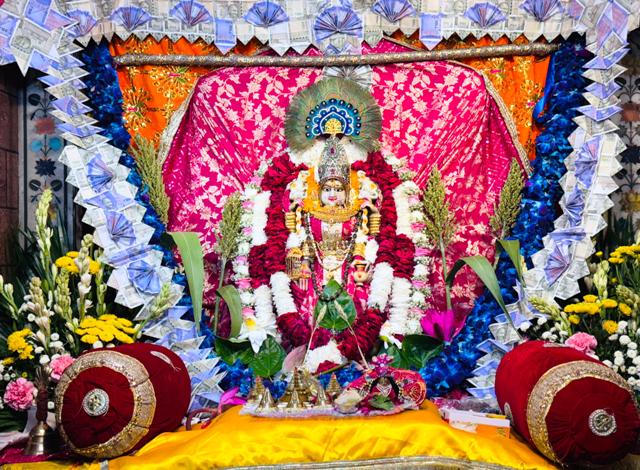
- The idol of Goddess Mahalaxmi is beautifully adorned in colourful sari-chunari, golden crown and jewellery; only the face is visible, the rest clothed.
Significance & Festivals
- Mahalaxmi is especially worshipped as the Goddess of Wealth and Prosperity. Many people believe blessings from her help in achieving success in business, life, and spiritual growth.
- For the Shirmali Samaj, Mahalaxmi is their family deity. It’s their tradition that any auspicious event begins with her worship.
- Key celebrations include:
- The birthday of Mahalaxmi, held on the eighth day of Shraddha Paksha, marked by elaborate rituals, special decorations, yagna, and a midnight aarti.
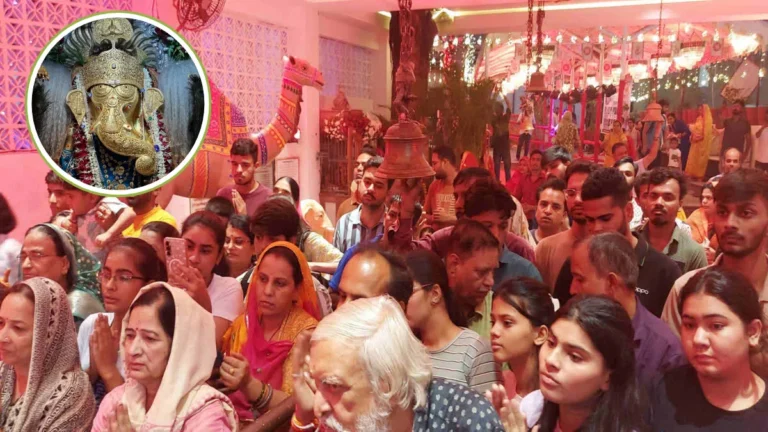
- Diwali (especially from Dhanteras to Annakut): The temple is illuminated, huge crowds gather, and special prayers (puja) are performed. On Diwali day aarti times like 5:30 AM, evening aarti, midnight aarti, and distribution of prasad such as kheer, laddoos etc. make the event grand.
- The birthday of Mahalaxmi, held on the eighth day of Shraddha Paksha, marked by elaborate rituals, special decorations, yagna, and a midnight aarti.
Visiting the Temple: Timings & Practical Details
- Location: Bhatiyani Chohatta, near Mamaji Ki Haveli, Rao Ji Ka Hata, Udaipur, Rajasthan – PIN 313001.
- Temple Hours: Typically open early in the morning around 5:00 AM and closes in evening around 8:00 PM. There is a break mid-day in many instances (morning and then evening hours) though in some listings the temple is mentioned as open all day.
- Entry: Free entry. Devotees come throughout the day; the best time to avoid crowds is early morning.
What to Expect at the Temple
- The atmosphere is devotional and peaceful, especially outside festival times. You will see devotees offering flowers, fruits, “panjari”, and prasad.
- The idol is dressed in vibrant garments—red, green, golden—and ornamented with jewellery. Only the face of the deity remains visible.
- The temple premises include the sabha mandap (assembly hall), where devotees gather for prayers and main rituals.
Best Times to Visit & Tips
- Festival Seasons (Diwali, Mahalaxmi’s Birthday, Navratri): The temple looks its most spectacular—full of decorations, lights, chanting, festivities. But expect large crowds and long queues.
- Early Morning Visits: If you want peaceful darshan without the crowd and heat, early morning is the best.
- What to Carry: Modest attire is appreciated. Bring offerings if you wish (flower, fruit, prasad). Also comfortable footwear, a bottle of water, perhaps a small umbrella in summer.
Why Mahalaxmi Temple is More than Just a Shrine
- It isn’t just a religious spot but a cultural anchor in Udaipur. The temple’s presence in the old city near Jagdish Chowk ties it to the city’s historic core.
- It reinforces community identity, especially for Shirmali Samaj and many devotees who start important events by seeking Goddess Mahalaxmi’s blessings.
- The rituals—yagna, abhishek, aartis—and the structure itself embody centuries of faith, craftsmanship, and tradition.
Final Thoughts
Mahalaxmi Temple in Udaipur is simultaneously serene and vibrant—a place where devotion, art, history, and community intersect. Whether you visit for solace, for festivals, or simply to admire its architecture and spiritual energy, it offers a profound experience.
If you’re planning a trip to Udaipur, be sure to include it in your itinerary—not just as a temple stop, but as a doorway into the living traditions of the city.